Uncover the Charm of the Vintage Story Font
There is a distinct magnetism to handwritten text that digital precision often misses. In a world saturated with geometric sans serif fonts and rigid grid systems, the Vintage Story typeface offers a breath of fresh air. It isn’t just a collection of letters; it is a visual representation of human touch. Designed as a handwritten script font, it captures the essence of old-world charm while maintaining the versatility required for modern projects. If you are looking to inject personality and authenticity into your work, understanding how to leverage a premium font like this is essential.
The Visual Character of Vintage Story
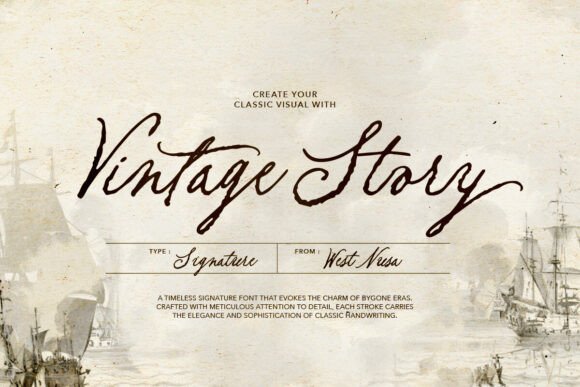
At its core, Vintage Story is defined by its rustic elegance. It avoids the messy, overly casual look of some modern typography trends, opting instead for a structured yet organic flow. The letterforms mimic the pressure variations of a broad-nibbed pen, creating a rhythm that feels natural and nostalgic. It carries the weight of history without feeling dated. This makes it an ideal candidate for projects that need to convey warmth, romance, or a handcrafted quality.
One of the standout technical features of this script font is its inclusion of ligatures and alternates. In standard typography, a ligature is a single glyph that combines two or more letters. In Vintage Story, these ligatures prevent the repetitive "digital look" that plagues many typefaces. When you type a word, certain letters connect differently depending on their neighbors. This creates a seamless flow that truly mimics handwriting. The alternates allow you to swap out specific letters to break up the visual pattern further. For a graphic designer or content creator, these tools are invaluable for creating custom wordmarks and unique layouts that don't look templated.
Practical Applications: Where Rustic Charm Meets Modern Design
The versatility of Vintage Story lies in its ability to adapt to different mediums. It is not merely a decorative asset; it is a functional tool for various industries. However, knowing where to apply a handwritten font is just as important as having it in your toolkit.
Wedding Stationery and Event Invitations
This is perhaps the most natural home for Vintage Story. The font’s romantic and elegant personality makes it perfect for wedding invitations, save-the-dates, and place cards. Its old-world charm pairs beautifully with floral illustrations or minimalist borders. Because it supports multiple languages, it is particularly useful for bilingual couples or destination weddings. The script style adds a layer of intimacy that a standard serif font simply cannot replicate.
Logo Design and Brand Identity
For entrepreneurs and small business owners, brand identity is everything. If your business falls within the lifestyle, beauty, artisan, or food sectors, Vintage Story can serve as the foundation of your logo design. A handwritten font signals that a brand is approachable, creative, and detail-oriented. Imagine a coffee roastery or a boutique clothing label using this typeface; it immediately sets a mood. However, legibility is key here. When using Vintage Story for logos, ensure the letter spacing is optimized so the brand name remains readable at smaller sizes.
Editorial Design and Packaging
Publishers and content creators can use this font to create compelling headers in editorial design. A script font breaks the monotony of body text, drawing the reader's eye to specific pull quotes or chapter titles. Similarly, in packaging design, Vintage Story can highlight specific ingredients or product benefits, such as "Handmade" or "Organic." It adds a tactile quality to the visual hierarchy, guiding the consumer’s attention to the most important information.
Strategic Typography: Influence on Brand Perception
Typography is psychology in visual form. The typeface you choose tells your audience how to feel about your message before they even read the words. Vintage Story influences brand perception by evoking trust and nostalgia. In an era of mass production, a handwritten aesthetic suggests care and craftsmanship.
When you use a creative font like this consistently across your digital and print assets, you build brand recognition. Customers begin to associate that specific style of writing with your business. Whether it appears on your social media graphics or your physical business cards, consistency reinforces professionalism. It shows that you have thought about your design assets and are intentional about how you present yourself. This attention to detail often translates to higher audience engagement, as people are naturally drawn to designs that feel curated and authentic.
Selecting and Pairing Vintage Story
While Vintage Story is a powerful display font, it should rarely stand alone in large blocks of text. Handwritten fonts are best used for impact—headers, short phrases, and logos. For the body text, you need a companion that offers high readability.
Finding the Perfect Font Pairing
The goal of font pairing is contrast without conflict. Because Vintage Story has high personality and complex curves, it pairs best with clean, neutral typefaces.
- With Sans Serif Fonts: Pairing it with a modern sans serif font creates a fresh, contemporary look. The geometric simplicity of the sans serif grounds the whimsy of the script. This works well for web design and tech startups that want to appear friendly.
- With Serif Fonts: If you want to maintain a classic, traditional vibe, pair it with a sturdy serif font. This combination is excellent for publishing and high-end branding. The serif font provides the structure, while Vintage Story provides the flair.
Evaluating Readability and Licensing
Before finalizing your design, always test for readability. Check how the font renders on mobile devices, as screen resolution can sometimes blur the fine details of a script font. Ensure there is enough contrast between the text and the background color.
Furthermore, pay attention to commercial licensing. If you are using Vintage Story for a client project, merchandise, or a product for sale, you must ensure you have the correct license. Most premium font licenses cover standard commercial use, but specific applications like print-on-demand or large-scale distribution might require an extended license. Respecting these terms protects you legally and supports the type designers who create these high-quality assets.
Conclusion
Vintage Story is more than just a typeface; it is a design asset that brings warmth and humanity to digital spaces. Whether you are a crafter making personalized gifts, a marketer designing a campaign, or a publisher looking for the perfect header, this handwritten script font offers a blend of beauty and utility. By pairing it wisely and using its alternates effectively, you can create designs that feel timeless, authentic, and deeply engaging.